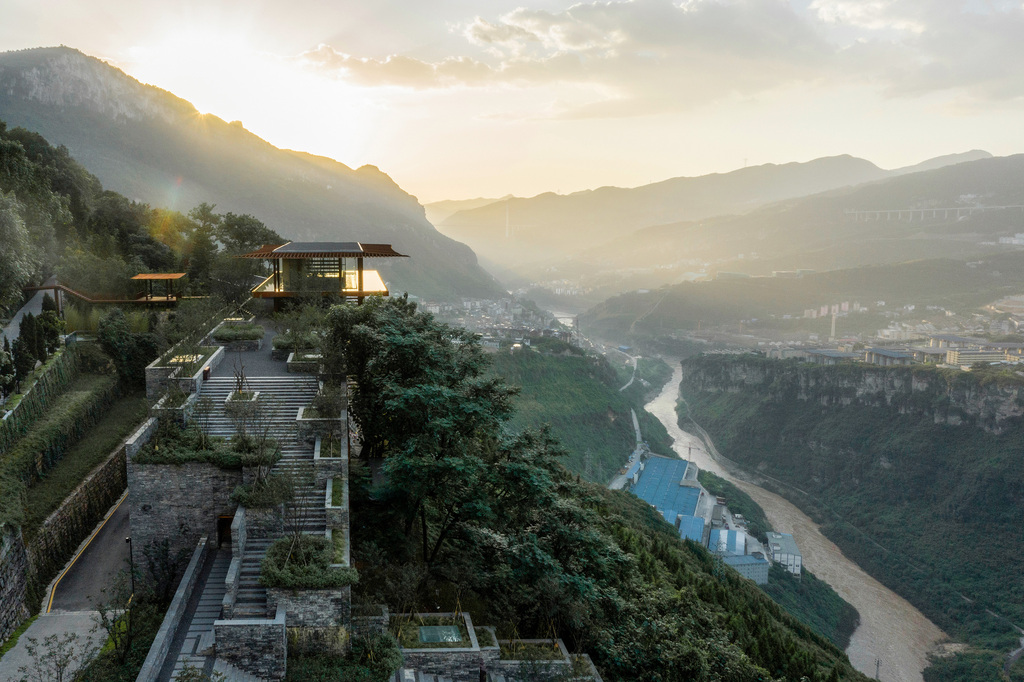
An appetizing Pritzker winner
Liu Jiakun closed his recent lecture for the Farrell Centre in Newcastle UK not with an image of one of his buildings, but with a photo of a Sichuan hotpot – that wonderfully fiery soup of sizzling chilies, rich broth and fish, sliced meat, or tripe. It is a dish that is almost part of Liu’s identity, born in Chengdu, capital of the Sichuan province, a place defined by its unique geography – being both the most eastern part of western China and the most western part of eastern China – where the snowy mountains hit a lowland basin from which the water drains in the upper reaches of the Yangtze River, writes Owen Hopkins.
Sichuan is a meeting place for different ethnicities – Quian, Tibetan and Han – reflected in its varying architectures, defined by timber, mud and brick. This varying quality is reflected in Liu’s architecture also, which defies any kind of aesthetic or formal characterisation, but is instead defined by a method in which architecture emerges from the qualities of the site – social, material, cultural, and topographical. The result is what we might call an architecture of interdependence: shaped by the character of the local, but speaking to a universal set of ideals and values.
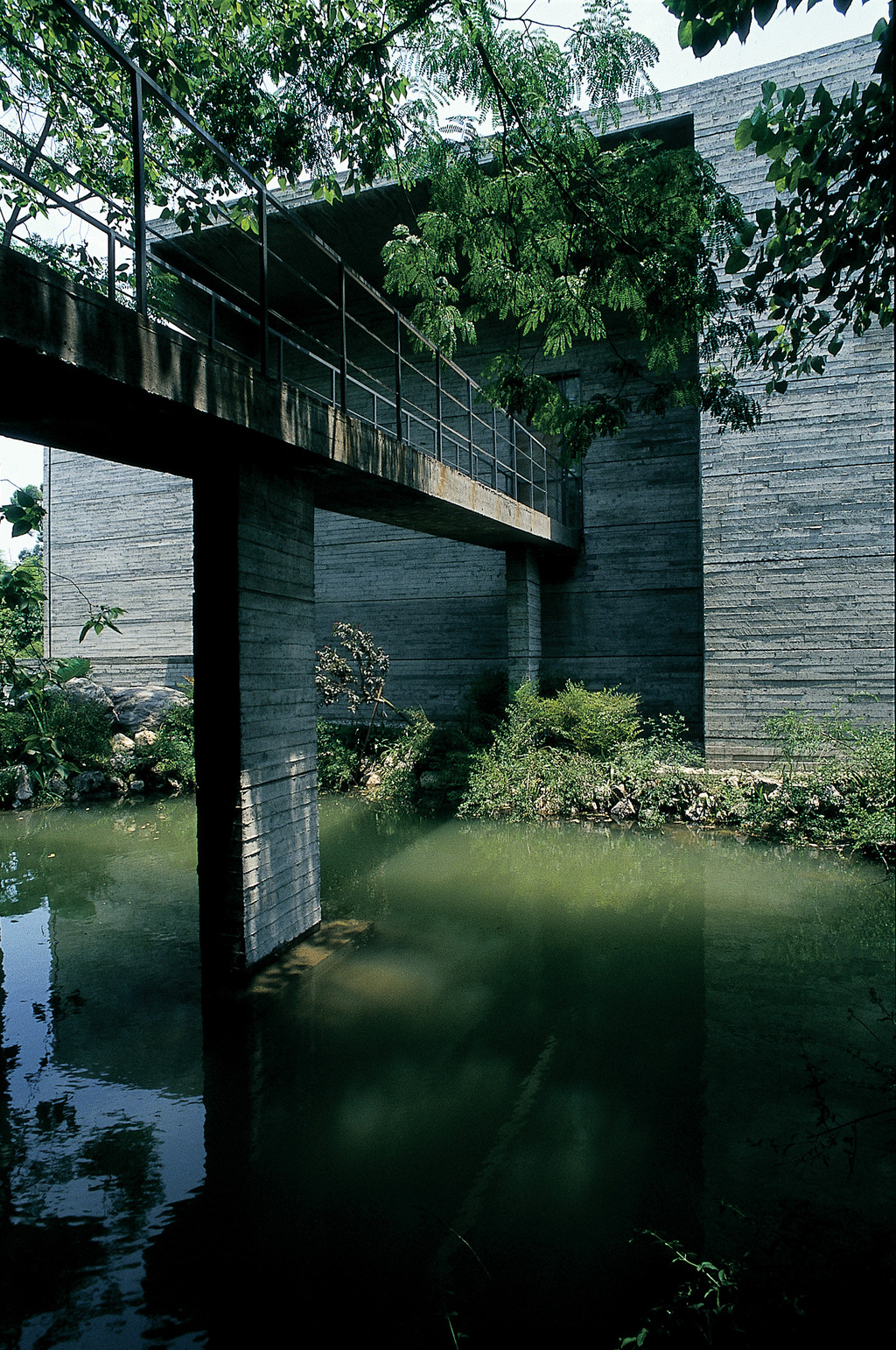
Luyeyuan Stone Sculpture Art Museum. Photo BI Kejian
This is exemplified in a relatively early project, the Luyeyuan Stone Sculpture Museum in Chengdu. Here, Liu talked about the technical limitations of local builders, and how the design process became one of constant recalibration according to what they could or couldn’t do. The site was next to a river, so part of the project involved bringing submerged material – rocks and pebbles – to the surface and situating the building amid the mature bamboo trees on the riverbank. The result has calmness and solemnity, yet an almost Brutalist sculptural power, with concealed ceiling lights bringing something of the outside ambience to the interior.
The devastating 2008 earthquake, in which more than 68,000 people died, casts a shadow over the region – especially for architecture, with the scandal of poor school construction leading to quite literally thousands of classrooms crumbling to dust and the tragic loss of 5,000 schoolchildren etched in local memories. During his lecture, Liu showed haunting footage of the immediate aftermath of the earthquake, talking about how he quickly formed a bond with a couple who had lost their only daughter, Hu Huishan, for whom he resolved to design a memorial.
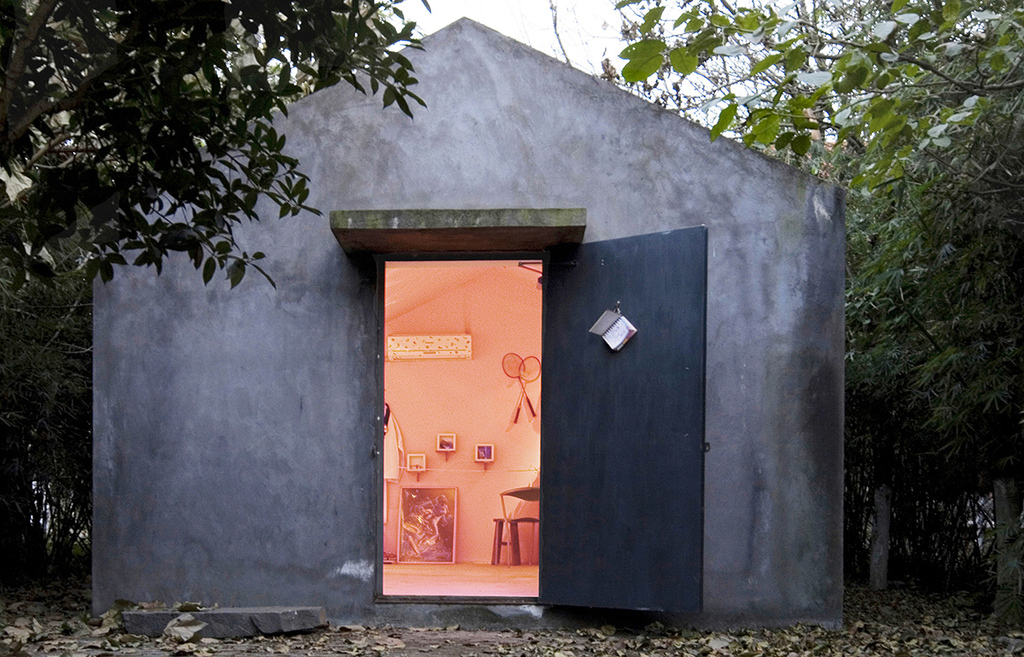
Hu Huishan Memorial ©Jiakun Architects
For other projects, Liu had collaborated with local craftsmen to develop what he called ‘rebirth bricks’ that were formed from the earthquake’s debris and related demolition, but felt that this wouldn’t be appropriate here because of the way they foregrounded himself as the architect. Instead, he sought to give the building a life of its own – ensuring it represented Hu Huishan and the thousands of others who lost their lives.
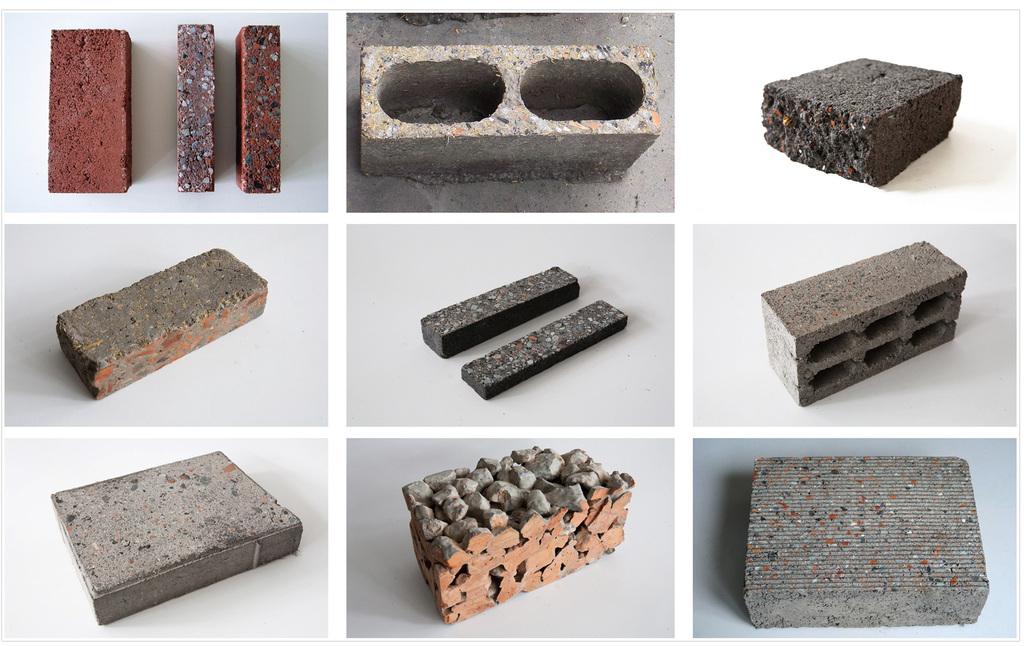
Rebirth Brick ©Jiakun Architects
The building is situated on a quiet, secluded site surrounded by trees and takes the shape of a relief tent, but all in grey. There is a door but it remains closed, with the interior visible only from a small peep hole, which reveals a pink space furnished with various objects and ephemera owned by Hu Huishan, lit by a single circular window from above. Critically this is an ‘illegal building’, unsanctioned by state authorities and a system that led to such devastating loss.
Liu’s best-known project, at least to a Western audience – and the one that surely led to his receiving the Pritzker Prize in 2025 – is on an altogether larger scale. West Village, in Chengdu, constitutes an entire city block amid the hyper-dense urban fabric. The site was already populated with various amenities for exercise and recreation, but the space was used inefficiently, with facilities only accessible to a limited number of people. Meanwhile, the client wanted to create a multi-use commercial building in the centre.
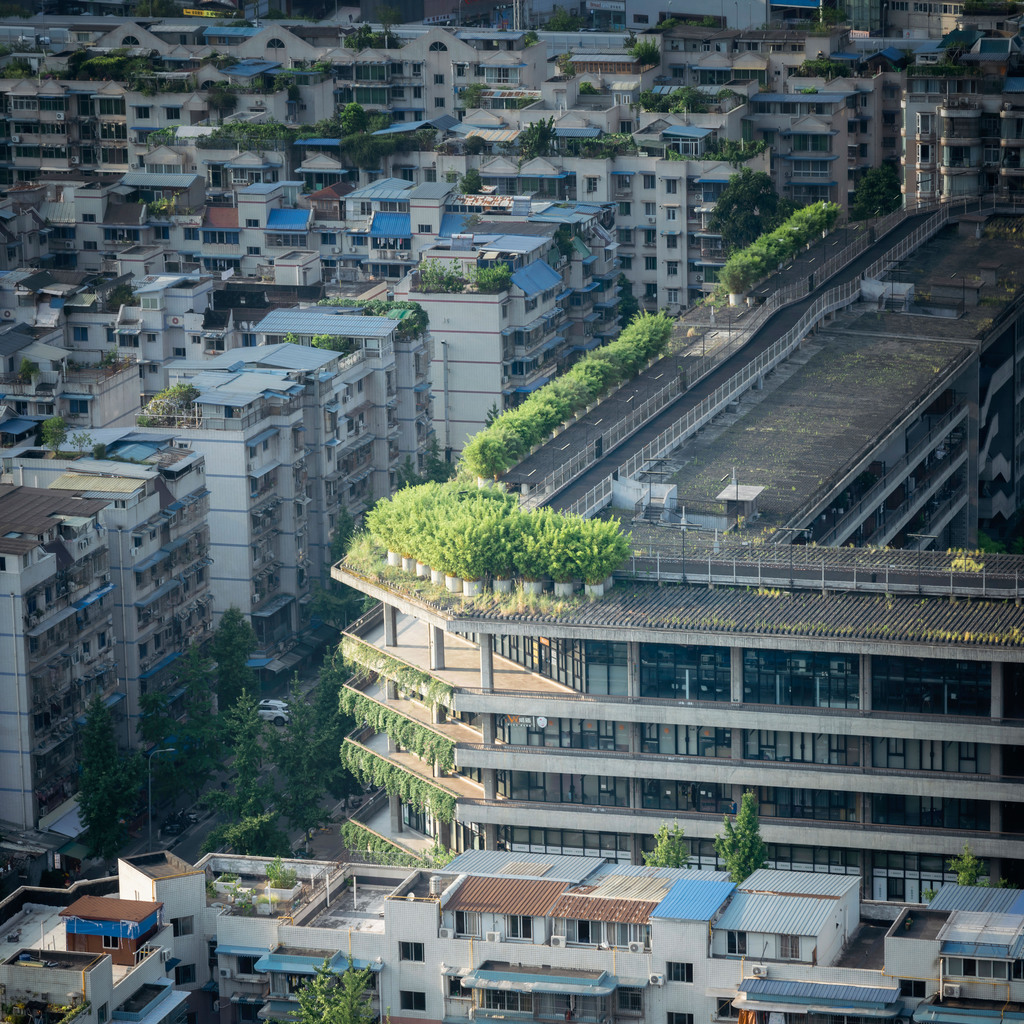
West Village. Photo Qian Shen Photography
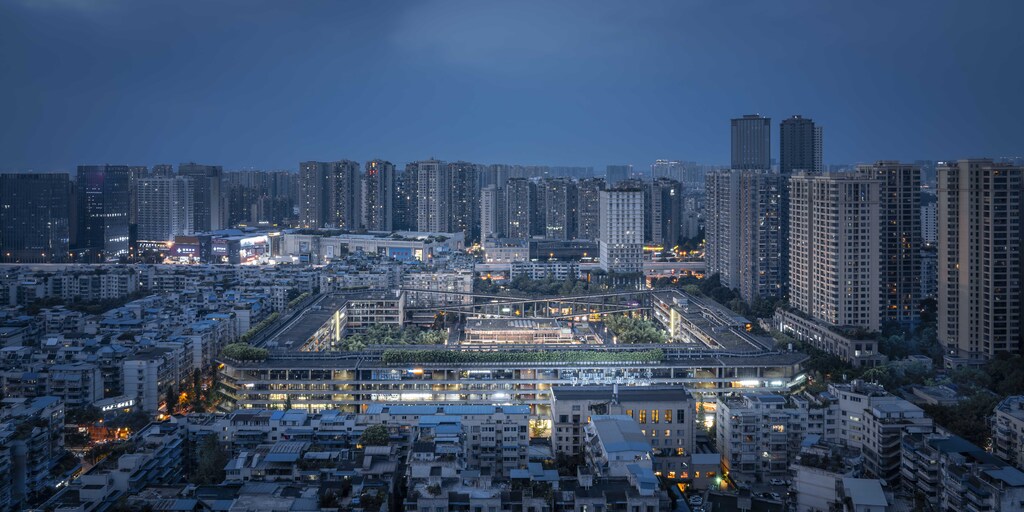
West Village Photo. Qian Shen Photography
Liu’s solution was to reconfigure the site entirely, as an enclosed courtyard with sporting facilities in the centre, and a five-storey perimeter building, partially open on one side. He was acutely aware of the failure of many 1960s megastructures, in part because of their overpowering scale, so worked to break the building into a number of different micro-courtyards. Each has its own range of uses and character, shaded by 28 different types of bamboo – directly echoing the spaces that facilitate the city’s vibrant street life. Rather than create a conventional running track, Liu conceived a kind of urban walkway that allows people to move up and through the building, letting them make it their own. Similarly, retail spaces are left for their tenants to fit out as they wish. The material palette, where visible, is low-key and consciously every day, reflecting Liu’s view of the role of the architect here as one of creating a framework for collective expression.
To go back to Liu’s Sichuan hotpot image, we might see the project as the architect creating the broth – full of spice, depth and richness – which ties together a diverse and competing range of constituent flavours and textures. As an analogy for an architectural philosophy, there is surely none tastier.
Owen Hopkins is Director of the Farrell Centre at Newcastle University.
Founder Partner