Putting certainty at risk
Our new prime Minister, Andy Burnham, is an optimistic chap, which makes a change from the last one, writes Paul Finch. Can-do is the style and there is a feeling that perhaps something will finally happen about our chronic housing shortage.
Huge sums are being promised to re-start significant public housing programmes, though the small print reveals that the money covers a 10-year period. Nevertheless, you get the sense that removing obstacles to growth, in housing, planning and other matters, is high on the agenda.
But then you see things happening which appear to be in complete contradiction to Mr Burnham’s ideas about growth-driven culture, whatever the post-code may be. An example of this is what is happening in the City of London, the nation’s financial heartland, whose post-code areas generate more wealth for UK plc that anywhere else in the land.
The City Corporation spent years on producing a Local Plan, a statutory document which will inform planning and growth strategies until 2040. Wide-ranging consultation programmes were undertaken. Once complete, the Plan needed approval from the government planning inspectorate, following an ‘examination in public’, where any objections could be heard, debated and decided on.
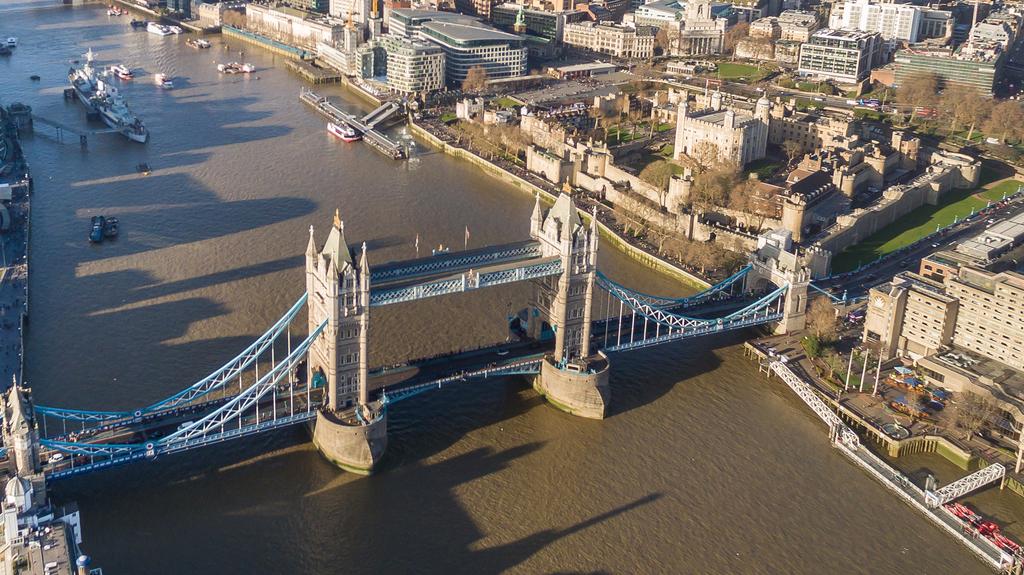
The heritage lobby lodged objections to the ‘jelly-mould’ proposition in the Plan, which suggests where tall buildings could be given planning permission. Too cliff-edge, said heritage objectors, and most definitely detrimental to the Tower of London.( What the neo-phones will never discuss is the biggest visual blockage in respect of Tower of London views: that is to say Tower Bridge, the 19th century curiosity which dominates its historic neighbour but, because it is quite old, is never criticised by the heritage brigade.)
Back to the public inquiry: in a considered report which supported the 2040 strategy, the planning inspector rejected the heritage complaints and confirmed that the City could proceed with its policies. Phew.
But . . . . many months later, a junior government minister (responsible for the minor matters of housing and planning), following a lobbying exercise by the self-same heritage brigade, ordered a review of the Plan and the support of the planning inspectorate.
Cue consternation in the Square Mile. Wasn’t this the exact opposite of what we keep hearing from the Labour government, that we should eliminate procedural delays which are the enemy of growth? Not so, it seems. The minister, one Matthew Pennycook, appears not to have received the email. He is a didlure version of Michael Gove before him, another politician who thought he knew better than any planner, architect or developer (his battle with Marks & Spencer over a new store in Oxford Street resulted in Gove being trounced in court). Like Gove, Pennycook is bring planning into disrepute by making it riskier. Riskier planning equals less investment, equals less growth.
The same is true of government plans to transform ‘local’ government by making it more ‘devolved’, which in practice means less local. Instead of Canterbury City Council you get the ‘East Kent Authority’. You really couldn’t make up the Orwellian abuse of language required to justify all this. The big beneficiaries on the planning front will be lawyers, who will be able to argue for years about which regime, which local plan, or which transitional arrangements, should be considered in relation to planning applications of any importance.
All the talk of devolution coincides with increasing calls to nationalise infrastructure, thereby making it a province of Whitehall. If civil servants are denied any control over spendthrift local authorities, now to be the province of regional mayors, they may get their chance to run railways, water and steel. The man from Whitehall, and possibly New Whitehall (Mr Burnham’s day-a-week dump in Manchester) will still know best.
Shortly after writing the above, I turn on the tv to hear that the government is reconsidering some of its local government changes, as a result of legal challenges and its own second thoughts. Perhaps sanity is breaking out.
The never-ending story
Our new National Planning Policy Framework revisions (for England) have been greeted with enthusiasm in some quarters, though since they are the eighth since the first iteration a decade ago, one assumes they will soon be found to require further revision. An incredibly boastful and dishonest introductory announcement made absurd claims about how the housing shortage is being addressed. And forget about devolution: an early paragraph in the revised document says a key policy is to ‘avoid unjustified local deviation from national policy in local plans’. See, the man/woman in Whitehall really does know best!
As ever, the framework is deadly scared to use the word architecture, preferring design. There is one reference to ‘architectural features’ and that is it. What is their problem? Don ‘t they think architects exist? What do they think architects do? Who do they think produces the ‘design’ they keep going on about. This is pitiful – mentally idle and rather creepy.
Apparently great architecture (sorry, design) is welcome – up to a point: ‘Substantial weight should . . . be given to outstanding or innovative designs which promote high levels of sustainability, or which help raise the standard of design more generally in an area, so long as they are consistent with the overall form and layout of their surroundings.’
You could scarcely make this up. Here is a list of buildings in London that, on this basis, would be denied planning permission today: the Tower of London; Tower Bridge (as previously mentioned); the Shard; Centre Point (now listed); the Vickers Tower (now listed); Dolphin Square; Westminster Cathedral; Belgravia; the Barbican; and so on.
Almost everything we value was created not on the basis of what already exited, but what was missing.
One an only look forward to the next revision of the NPPF in the expectation that it will be even more feeble-minded and contradictory. Just don’t expect any acknowledgement that architecture matters. It’s all about planning. But as Mike Tyson once remarked: ‘Everyone thinks they’ve got a plan . . . until they get punched in the face.’
Founder Partner