Raving and melancholy
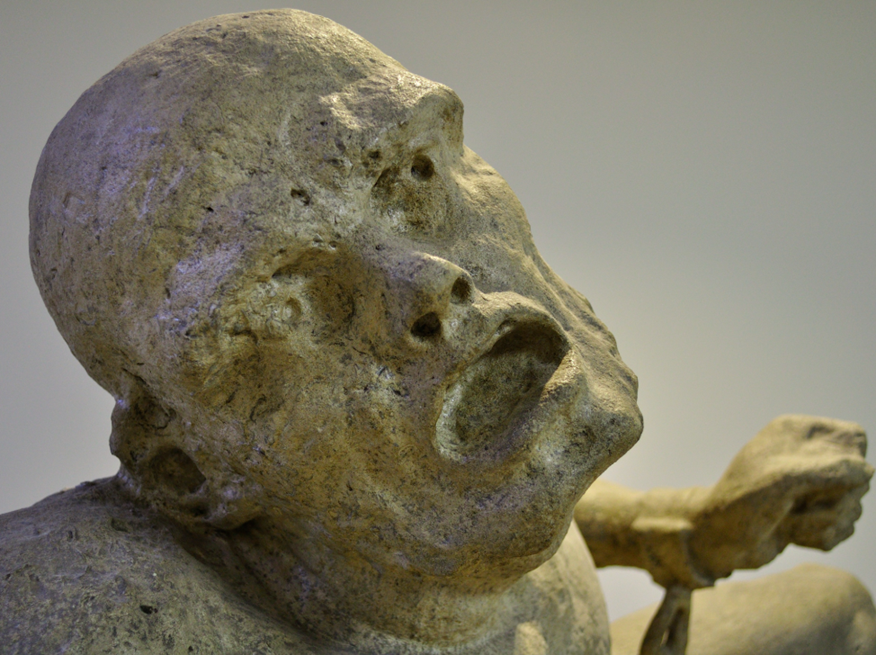
Image: ‘Raving’: Caius Cibber’s male figure in chains intended to symbolise uncontrollable insanity
Current sensibilities render us incredulous that life-size Portland stone statues portraying ‘madness’ should have been incorporated into a building designed to house the insane, but such was the commission that Danish artist Caius Gabriel Cibber accepted when he agreed to create two reclining figures over the gateway into architect Robert Hooke’s new Bethlem Hospital. Opened in Moorfields, London, in 1676 in the immediate aftermath of the Great Fire of London, this was the first purpose-built psychiatric hospital in the UK.
Cibber, who would later create the statue of King Charles II that can be found to this day in Soho Square, and the sculptural group known as the Conversion of St Paul on the west front pediment of St Paul’s Cathedral, intended his work at Bethlem Hospital to represent the 17th century’s dual classifications of mental illness: the intense and chaotic psychosis of ‘raving madness’ symbolised by a male figure in chains and the quiet, deep despair of ‘melancholy madness’ portrayed through a slumped female form.
Although intended for those suffering from psychiatric disorders, Hooke’s architectural design showed no particular fitness for purpose: it was merely the latest of a lineage of buildings dating back to 1247, when the first hospital of that name, ‘The Priory of the New Order of Our Lady of Bethlehem’, had occupied nearby land that is now Liverpool Street railway station.
Increasingly a refuge for those who were considered ‘insane’, it was perhaps inevitable that by the end of the 14th century the priory’s reputation as a dedicated ‘mental asylum’ would be clearly established.
But despite being regarded as state of the art mental health care, the reality in terms of the misinformed and cruel treatment of inmates was clearly evidenced in the etymological evolution of its name: the original ‘Bethlehem’ (often spelled and pronounced ‘Bethlem’ or ‘Betleem’) mutated through the 16th and 17th centuries into ‘Bedlam’ which became the established pronunciation and, eventually, the common spelling of the widely used generic term for any lunatic asylum.
Ultimately the hospital would emerge infamous as a place of entertainment: in return for an entrance fee, visitors could gawk at the inmates at their leisure, and for their pleasure. Thus it was that Britain’s foremost mental hospital was effectively transformed into a public attraction, with reported (albeit unverified) visitor numbers of some 96,000 a year.
The word ‘bedlam’, having completely shifted from its religious roots in Bethlehem, thus became associated with scenes of disorder, uproar, confusion, chaos and finally, complete madness.
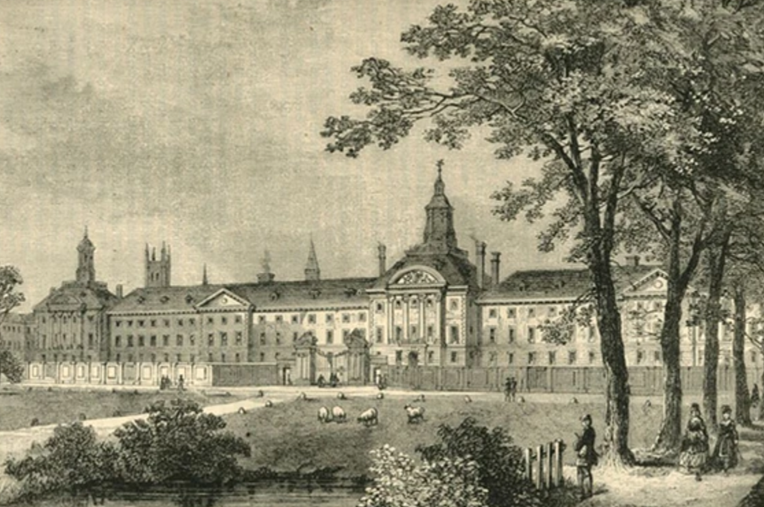
Robert Hooke’s Bethlem Hospital with Cibber’s statues atop the entrance gates to the fore – according to one commentator, all more akin to Louis de Vau’s reworking of the Palace of Versailles for Louis XIV than a medical facility
But if Bethlem was the oldest psychiatric institution, the UK’s first ‘modern’ purpose-designed psychiatric hospital was York Retreat, developed by the quaker William Tuke and opened a century later in 1796. A key part of the ‘moral architecture’ movement, Tuke’s work, and the ‘moral treatment’ philosophy that informed it, would have major impact on subsequent 19th century asylum architecture in Europe and North America.
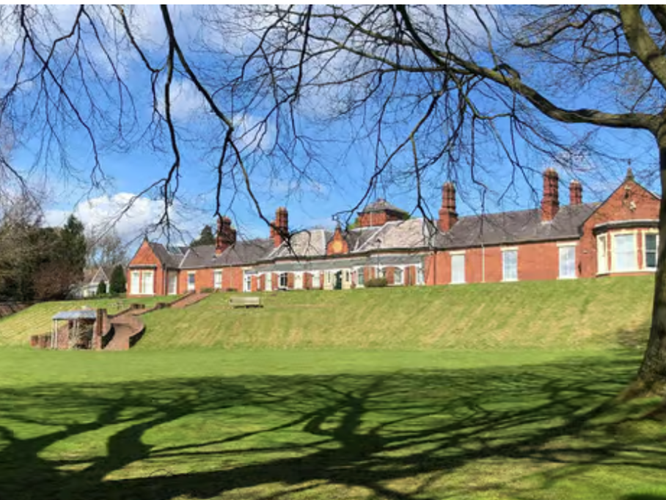
York Retreat purpose-designed psychiatric hospital – closed in 2018, it has since been converted to apartments
In contrast to the disgraceful goings on at Bethlem, treatment of York Retreat’s residents was based on kindness, respect, and structured routines. The environment was therapeutic with gardens, good day-lighting, calm surroundings and minimal restraint replacing, as far as possible, chains and harsh confinement. For the first time, attention would focus on each patient’s emotional and social needs in a facility created specifically for ‘mental care’.
It was against this background that, amid the ever-growing costs of maintenance of its crumbling unsustainable building, Hooke’s Bethlem was demolished and replaced by another ‘purpose-built’ asylum on Lambeth Road in Southwark, the first 122 ‘patients’ being transported from Moorfields in a convoy of hackney carriages to take up residence in August of 1815.
However, and perhaps as a token of general resistance to the emerging preference for ‘moral’ treatment’, Cibber’s two statues, Raving and Melancholy, were transported ahead of the inmates for incorporation, once more, over the entrance as symbolic guardians of Bethlem’s new facility.
Thereafter, the County Asylums Act of 1808 would herald a wave of publicly funded purpose-built public asylums for pauper patients, which included Nottingham General Lunatic Asylum (1811) and Lancaster County Lunatic Asylum (1816).
Then, with the Lunacy Act of 1845, came the great boom of Victorian asylums including Colney Hatch (1851) which would become one of the largest asylums in Europe, and the splendidly named Worcester City and County Pauper and Lunatic Asylum (1852), later more kindly named as Powick Mental Hospital where this author was once treated.
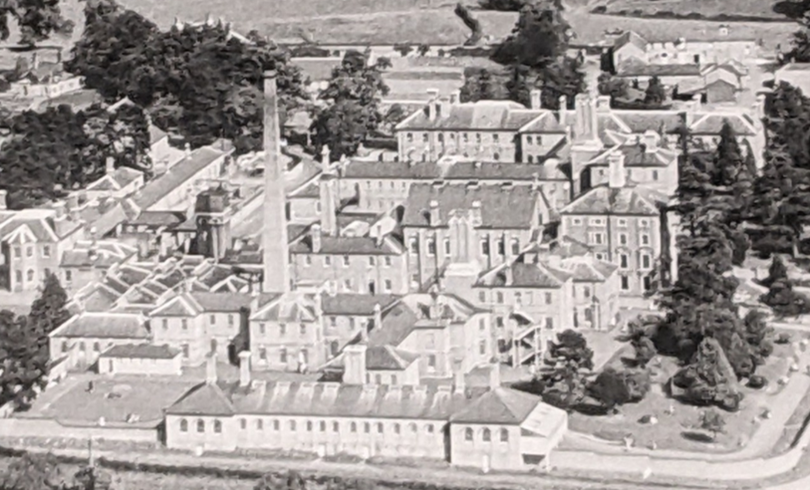
Worcester City and County Pauper and Lunatic Asylum
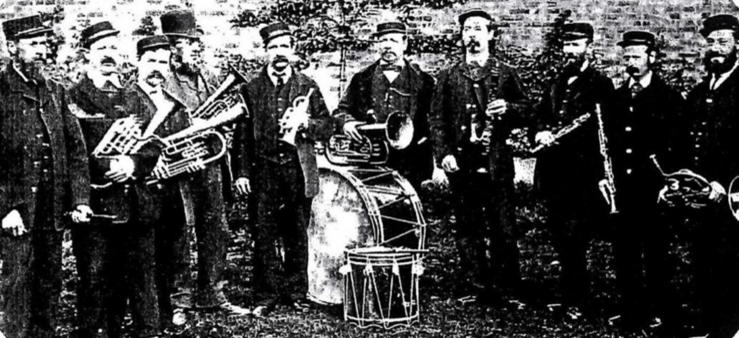
The Worcester City and County Pauper and Lunatic Asylum Band
Typical features of these institutions were their semi-rural locations, the segregation of patients by ‘class’, gender, condition and illness severity, and their status as large self-contained communities.
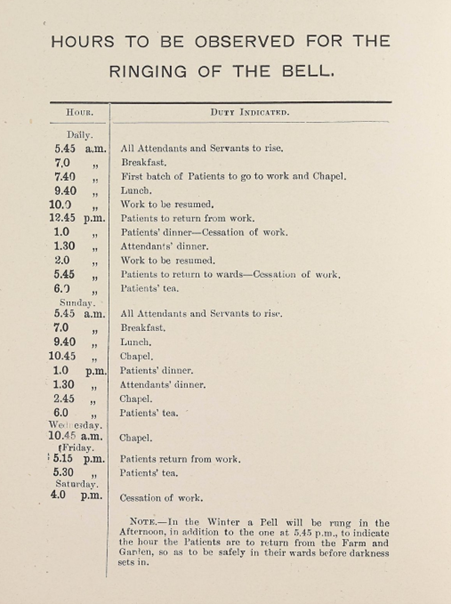
The daily routine at the Worcester City and County Pauper and Lunatic Asylum
In 1930, Bethlem Hospital would once more be moved to new purpose-designed buildings at its current site in Bromley, South London. Again the Cibber statues were relocated, but due to their deteriorating condition, and no doubt as a consequence of growing sensibilities about their inappropriateness, they were positioned indoors as preserved artefacts of a slowly receding era.
Today, based in over 200 acres of green space, Bethlem Royal Hospital is part of the South Maudsley NHS Foundation Trust and has a leading reputation for excellence in specialised mental health care.
It also contains the Bethlem Museum of the Mind, which is well worth a visit. Designed by Fraser Brown MacKenna Architects (FBM) as a major reorganisation of Elcock and Cheston’s splendid Art Deco building, the new museum’s entrance is appropriately framed by the figures of Raving and Melancholy.
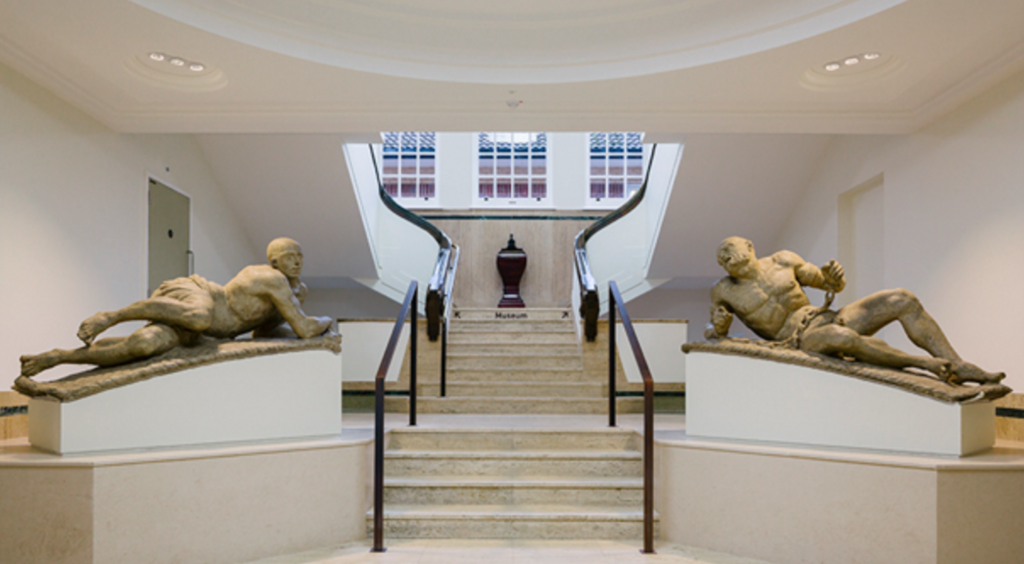
Entrance to the new Bethlem Museum of the Mind, aptly framed by Raving and Melancholy
Happily, after the disastrous recent policy of extensively ‘decanting’ vulnerable people from the increasingly outdated and discredited facilities that once served our community’s most extreme mental health needs, we are at last again seeing funding for new facilities. Amongst these is a replacement of the dreadful Broadmoor Criminal Lunatic Asylum with a fine building designed by a team led by Oxford Architects.
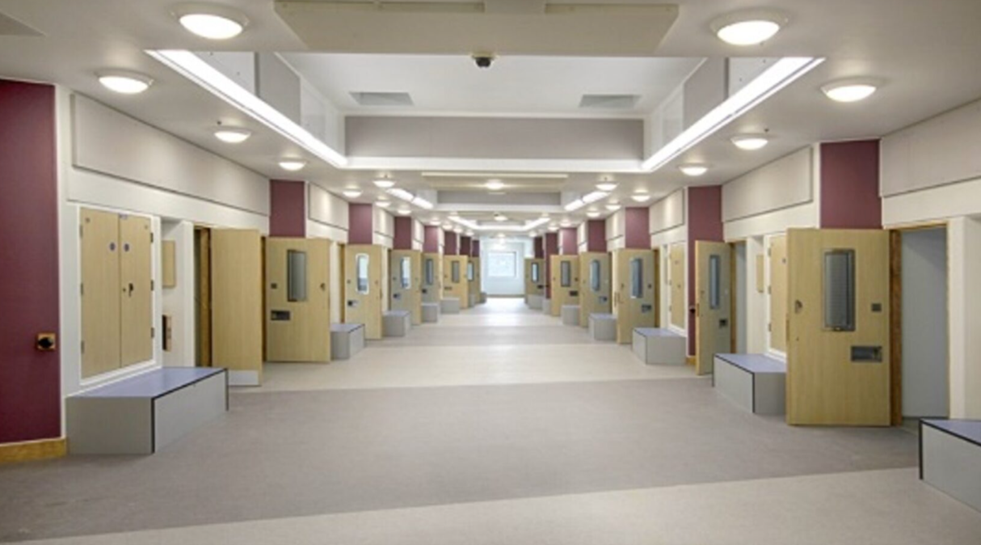
Broadmoor new high-security psychiatric hospital: landing area
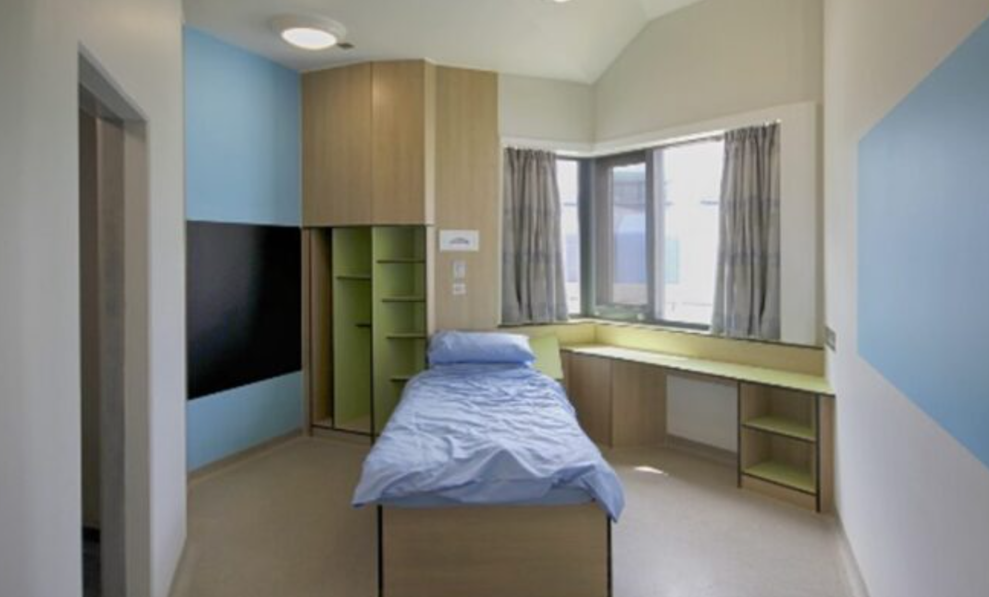
Broadmoor new high-security psychiatric hospital: typical bedroom
Other new developments include Springfield University Hospital (South West London) which provides modern inpatient, acute, and forensic services as part of a new ‘village environment’; Highgate East Mental Health Hospital, a 78-bed facility opened in July 2024 featuring single en-suite rooms and sky gardens as well as Silverwood Unit (Surrey); Carsington Unit (Derby); Combe Valley Hospital (Bexhill); and Sherwood Oaks (Mansfield).


Sherwood Oaks: a new 70-bed psychiatric hospital opened in December 2022 with four single-sex acute wards
Each of these new hospitals provide high-quality care environments, offering private en-suite bedrooms, therapeutic spaces (sensory and art rooms), and better, safe outdoor access to aid recovery – all laudable objectives but hopefully delivered with more architectural sensibility than the images of Sherwood Oaks, as shown above, might otherwise suggest.
Today, of course, we witness an ever-growing awareness of, and apparent sympathy for, mental health issues with some one in four people in the UK estimated to experience problems in any given year.
The architectural profession is of course not exempt in this respect, and of particular note has been the controversy surrounding historic complaints of mental stress and distress amongst students which were the subject of major and costly investigations in recent years at the Bartlett School of Architecture.
Architectural practice has long had ‘form’ in this area: Pugin, pioneer of Gothic Revival and designer of churches as far afield as Australia as well as Big Ben and Victoria Tower, was himself admitted to the Royal Bethlem Hospital in February 1852 in a state of apparent ‘severe mental crisis’ following a sustained period of overwork. He died shortly thereafter, seemingly ‘burned out’ at just 40 years of age.
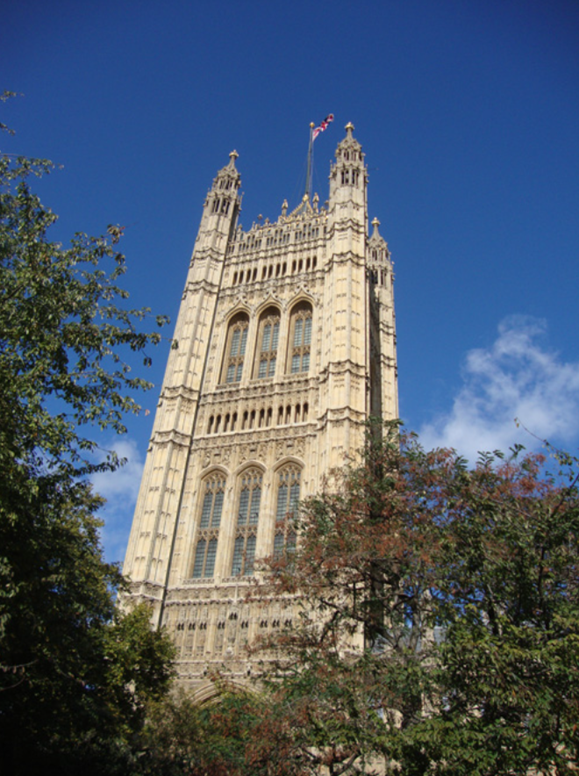
Augustus Pugin’s Victoria Tower designed with Sir Charles Barry as part of the Palace of Westminster
Other major names with documented mental health problems or concerns include:
- Walter Gropius - post-traumatic stress disorder.
- Mies van der Rohe - post-traumatic stress disorder and/or brain damage the latter allegedly consequent on military service in WW1.
- Charles Jeanneret-Gris (Le Corbusier) - alleged (though disputed) autism.
- Adolph Loos - dementia.
- Antonio Gaudi - reclusive behavioural tendancies.
But the famous aside, I worry about the seemingly ever-increasing pressures on those running smaller practices. Architecture has always been a tough game, but it seems that the ever-intensifying obligations of employment law and the complexities of construction regulation, combined with the evermore hostile commercial, procurement and insurance markets within which the UK profession operates are imposing pressures beyond sense or reason.
The RIBA and its partners in architectural education should ensure that the training of architects has resilience as a core objective. So long live the demands of project-based learning and the intensity of the crit.
Founder Partner